
Why Are We Doing This? Part 2
We’ve already established that we have a burning platform. Here’s Part 2 of why we’re doing this…
Last year, we interviewed leaders across government, nonprofit, and commercial sectors, and it turns out: 𝗻𝗼 𝗼𝗻𝗲 𝗶𝘀 𝗮 𝗳𝗮𝗻 𝗼𝗳 𝗵𝗶𝗲𝗿𝗮𝗿𝗰𝗵𝘆. I’ve literally never had someone tell me, “Hierarchy is working great for us!”
So if everyone knows the pain, why don’t more organizations try alternatives?
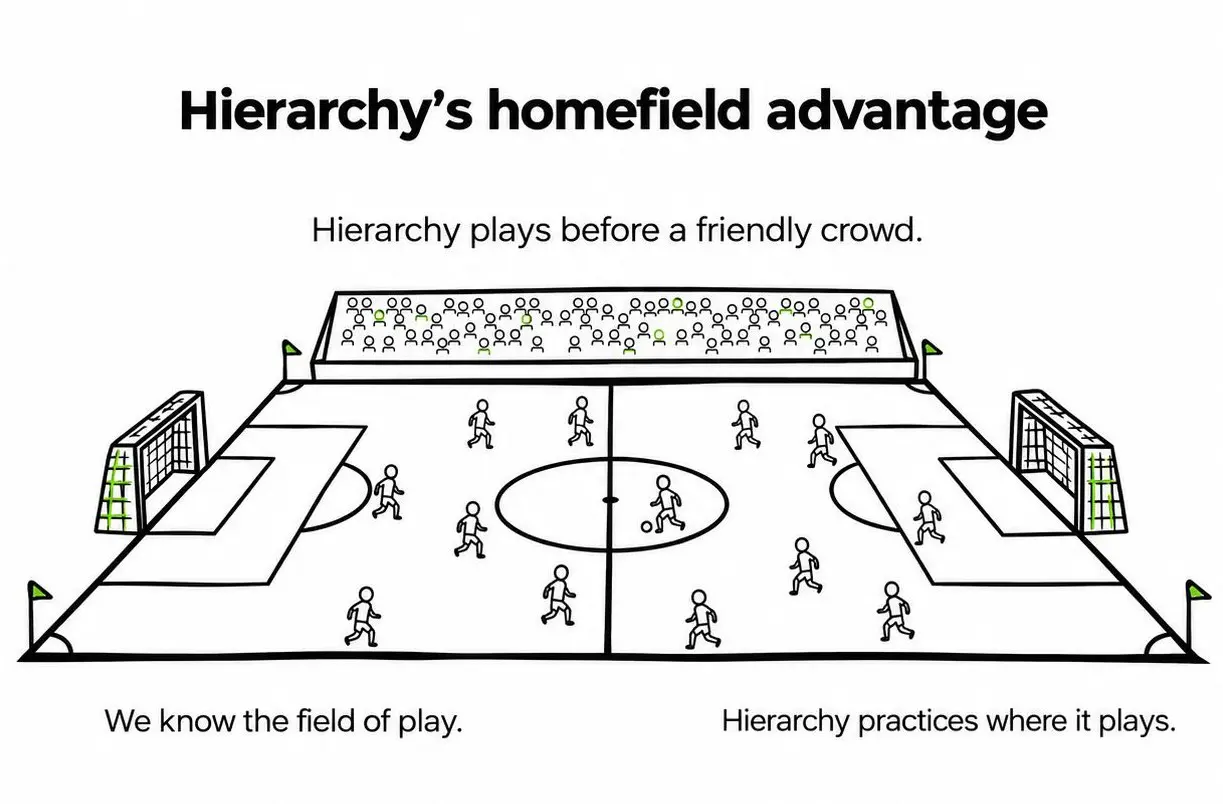
𝗪𝗲 𝗯𝗲𝗹𝗶𝗲𝘃𝗲 𝗶𝘁’𝘀 𝗯𝗲𝗰𝗮𝘂𝘀𝗲 𝗵𝗶𝗲𝗿𝗮𝗿𝗰𝗵𝘆 𝗵𝗮𝘀 𝗮 𝗵𝗼𝗺𝗲-𝗳𝗶𝗲𝗹𝗱 𝗮𝗱𝘃𝗮𝗻𝘁𝗮𝗴𝗲—𝗮𝗻𝗱 𝗮𝗻𝘆𝘁𝗵𝗶𝗻𝗴 𝗲𝗹𝘀𝗲 𝗶𝗻𝗰𝘂𝗿𝘀 𝗮𝗻 𝗼𝘂𝘁𝘀𝗶𝗱𝗲𝗿’𝘀 𝗽𝗲𝗻𝗮𝗹𝘁𝘆. Think about it…
𝟭. 𝗪𝗲 𝗮𝗹𝗹 𝗸𝗻𝗼𝘄 𝘁𝗵𝗲 𝗳𝗶𝗲𝗹𝗱 𝗼𝗳 𝗽𝗹𝗮𝘆.
We’ve spent our lives in hierarchies. We understand the roles, rules, career paths, and unwritten norms almost instinctively. Even when hierarchy isn’t working well, we know how to operate within it. Alternatives require learning a new game.
𝟮. 𝗛𝗶𝗲𝗿𝗮𝗿𝗰𝗵𝘆 𝗽𝗿𝗮𝗰𝘁𝗶𝗰𝗲𝘀 𝘄𝗵𝗲𝗿𝗲 𝗶𝘁 𝗽𝗹𝗮𝘆𝘀.
Business schools, leadership programs, and consultants largely teach us how to do hierarchy better—not how to organize differently.
𝟯. 𝗛𝗶𝗲𝗿𝗮𝗿𝗰𝗵𝘆 𝗽𝗹𝗮𝘆𝘀 𝗯𝗲𝗳𝗼𝗿𝗲 𝗮 𝗳𝗿𝗶𝗲𝗻𝗱𝗹𝘆 𝗰𝗿𝗼𝘄𝗱.
When organizations struggle, we blame leadership, strategy, or culture. We rarely question the structure itself.
So, that’s why we’re doing this. 𝗕𝘆 𝗳𝗮𝗺𝗶𝗹𝗶𝗮𝗿𝗶𝘇𝗶𝗻𝗴 𝗹𝗲𝗮𝗱𝗲𝗿𝘀 𝘄𝗶𝘁𝗵 𝗮𝗹𝘁𝗲𝗿𝗻𝗮𝘁𝗶𝘃𝗲 𝗼𝗿𝗴𝗮𝗻𝗶𝘇𝗮𝘁𝗶𝗼𝗻𝗮𝗹 𝗳𝗼𝗿𝗺𝘀, 𝘄𝗲 𝗹𝗲𝘃𝗲𝗹 𝘁𝗵𝗲 𝗽𝗹𝗮𝘆𝗶𝗻𝗴 𝗳𝗶𝗲𝗹𝗱. Decentralization isn’t right for every organization. But leaders should understand the alternatives—so they can intentionally design for their mission rather than simply inherit the default.
